Prepare with reliable information.
Use these official sources and practical checklists to organize your questions before making a Medicare decision.
Bring these five things
- Your Medicare card and current plan cards
- A complete prescription list with doses and frequency
- Your doctors, specialists, hospitals, and pharmacies
- Recent plan notices, including the Annual Notice of Change
- Your questions, travel needs, and monthly budget priorities
Official sources
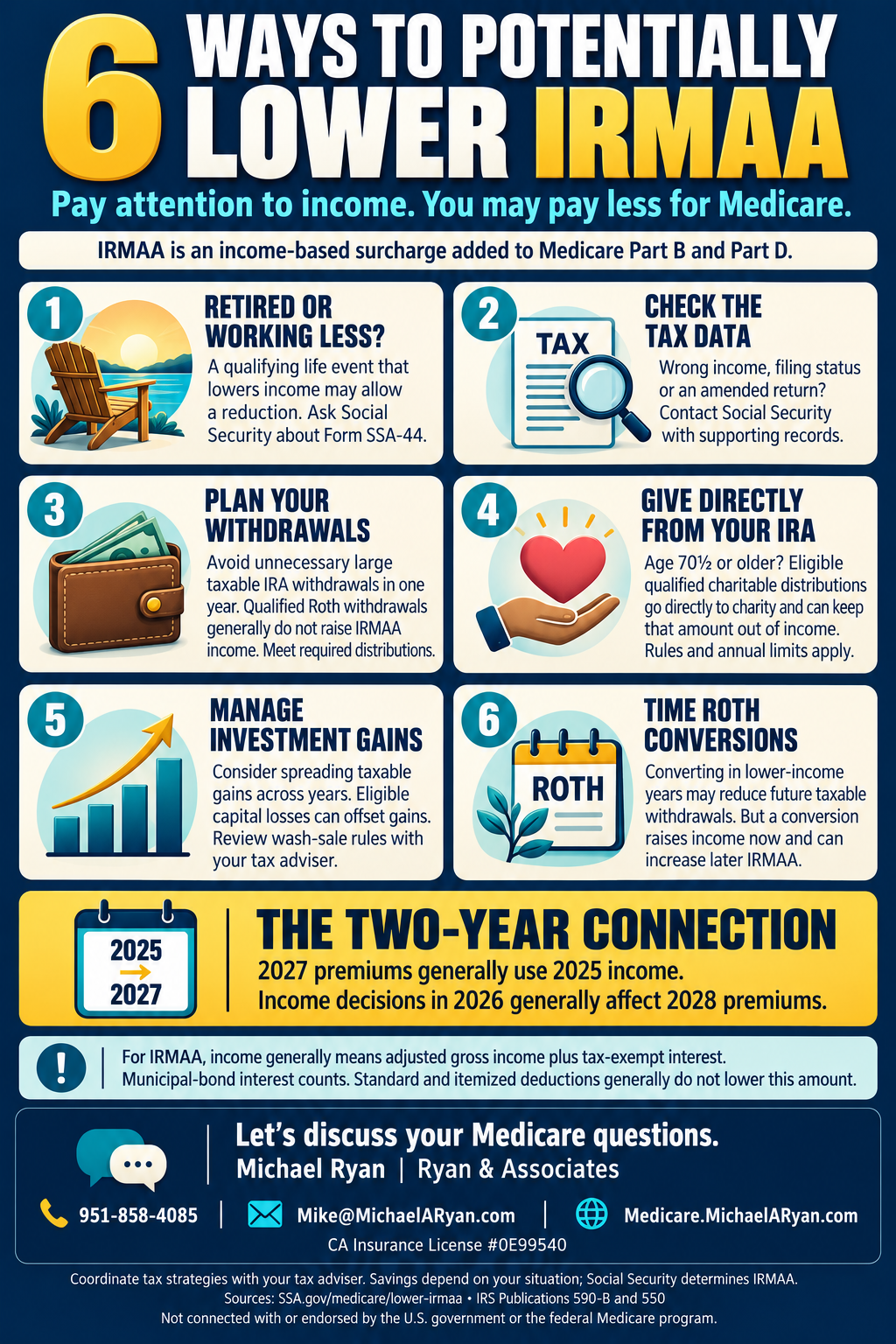
6 Ways to Potentially Lower IRMAA
Learn how life changes, withdrawal planning, charitable giving, investment gains, and Roth conversion timing may affect your Medicare income-related surcharges.
Read the six strategies
- Retired or working less? A qualifying life event that lowers income may allow a reduction. Ask Social Security about Form SSA-44.
- Check the tax data. Contact Social Security with supporting records if income, filing status, or an amended return changes the information used.
- Plan your withdrawals. Avoid unnecessary large taxable IRA withdrawals in one year. Qualified Roth withdrawals generally do not raise IRMAA income. Meet required distributions.
- Give directly from your IRA. At age 70½ or older, eligible qualified charitable distributions go directly to charity and can keep that amount out of income. Rules and annual limits apply.
- Manage investment gains. Consider spreading taxable gains across years. Eligible capital losses can offset gains. Review wash-sale rules with your tax adviser.
- Time Roth conversions. Converting in lower-income years may reduce future taxable withdrawals, but a conversion raises income now and can increase later IRMAA.
Medicare generally uses income from two years earlier. For IRMAA, income generally means adjusted gross income plus tax-exempt interest. Municipal-bond interest counts; standard and itemized deductions generally do not lower this amount.
Coordinate tax strategies with your tax adviser. Savings depend on your situation; Social Security determines IRMAA.
Social Security: Request an IRMAA reduction · IRS Publication 590-B · IRS Publication 550
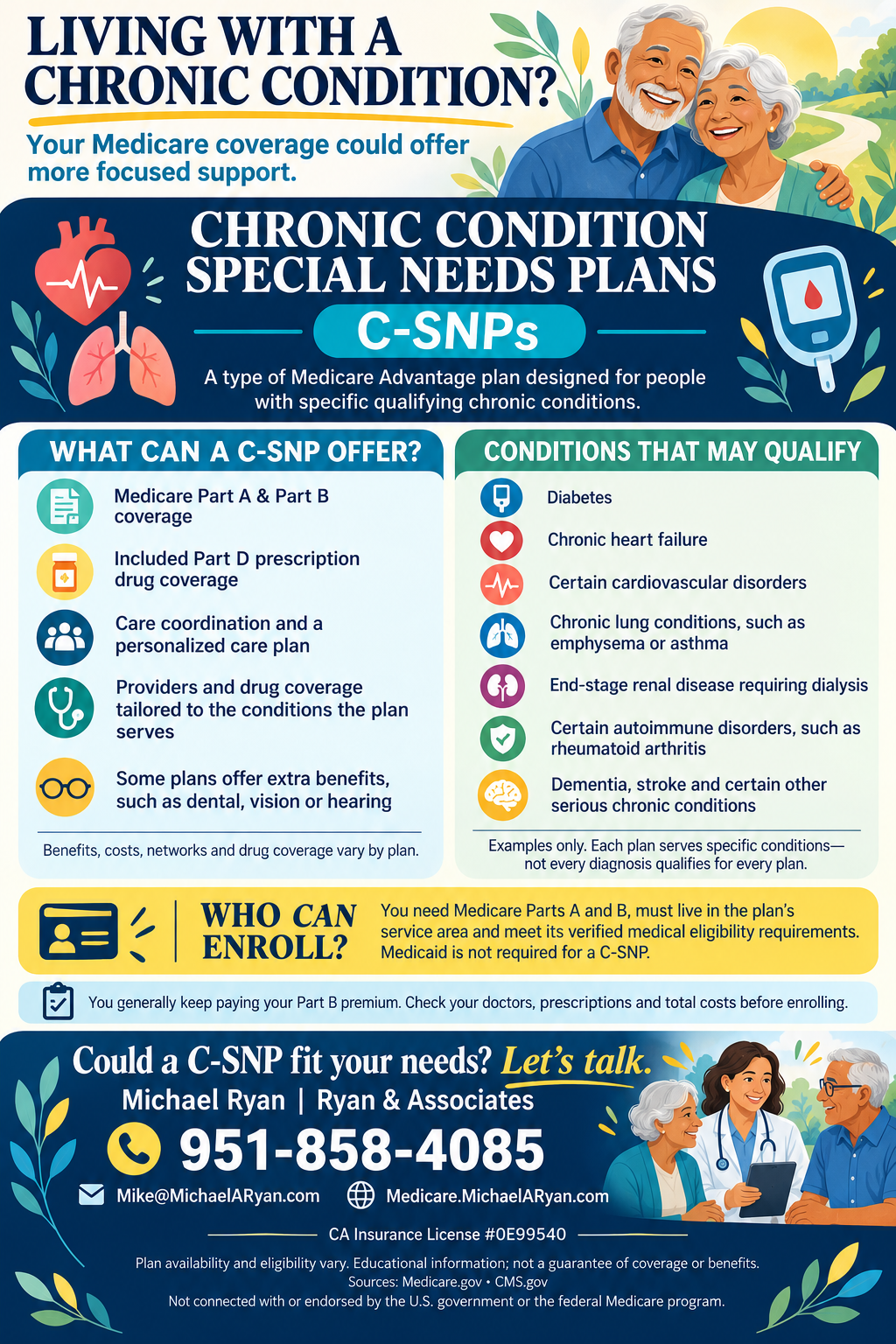
Understanding C-SNP Medicare plans
Explore who may qualify, how care coordination works, when enrollment may be possible, and the questions to ask before choosing a Chronic Condition Special Needs Plan.
Each plan serves specific conditions. Benefits, eligibility and availability vary by plan and location.
Common questions
Do I have to enroll at age 65?
Not everyone must enroll at the same time. Employer coverage, Social Security status, and other circumstances can affect timing. Confirm your situation before delaying Part A, Part B, or Part D.
Should I review my coverage every year?
Yes. Plan premiums, benefits, networks, formularies, and pharmacy arrangements may change, and your own needs may change too.
Is the lowest premium always the least expensive option?
No. Consider total annual cost, including deductibles, copays, coinsurance, medications, and the care you expect to use.
Can I keep all my doctors?
That depends on the coverage path and plan. Provider participation and networks should be confirmed directly before enrollment.